
 EN
EN
Selecting the right dental chair configuration is one of the most critical decisions when modernizing a dental practice. The dental chair serves as the foundation of your entire clinical environment, influencing patient comfort, clinical efficiency, and long-term operational costs. Modern dental installations demand configurations that balance ergonomic excellence, spatial optimization, and technological integration. Understanding which dental chair models and layouts fit your practice requires careful evaluation of clinical workflow, patient demographics, and facility constraints.
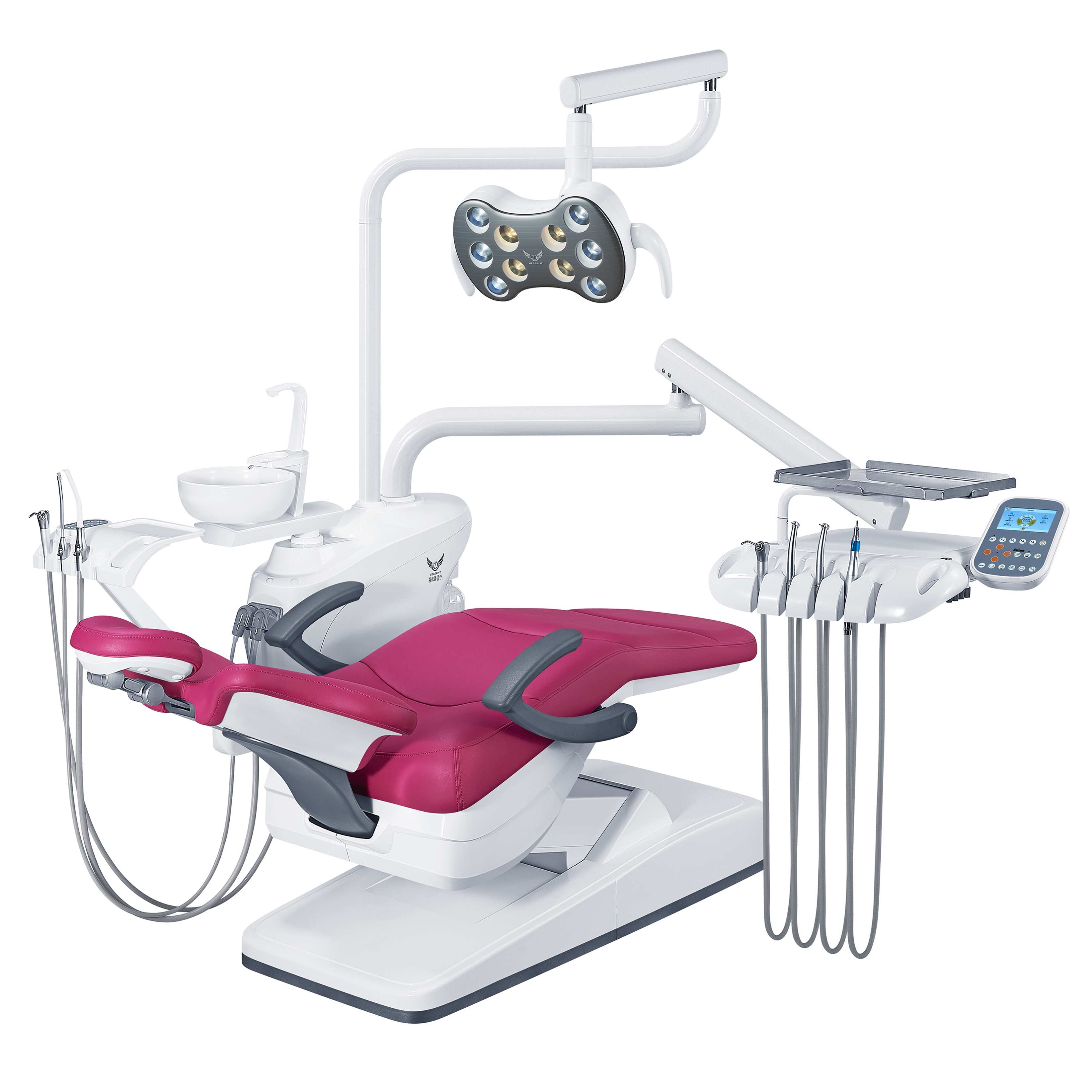
A modern dental chair configuration extends beyond the chair itself to encompass the entire unit ecosystem, including the operator stool, delivery systems, and auxiliary equipment. Today's successful dental installations integrate ergonomic design principles with intelligent hydraulic systems that enhance precision and reduce fatigue during extended clinical sessions. The right dental chair configuration adapts to multiple clinical specialties, accommodates various patient body types, and supports both traditional and digital workflows. When evaluating dental chair options for your facility, you must consider how each configuration aligns with your treatment protocols, available floor space, and future expansion plans.
Understanding Modern Dental Chair Design Principles
Ergonomic Foundation and Operator Comfort
The foundational principle behind modern dental chair configurations is ergonomic design that protects both patients and clinical staff from injury and fatigue. A properly configured dental chair maintains the patient in a supine or semi-supine position that allows optimal visibility and accessibility while supporting natural spinal alignment. The dental chair backrest design significantly influences operator posture, as dentists and hygienists spend six to eight hours daily positioned around the chair. Advanced dental chair models feature adjustable backrests, often with butterfly-shaped or contoured designs, that accommodate various treatment positions without requiring staff to adopt compromised postures. Intelligent hydraulic systems in modern dental chairs enable smooth transitions between positions, reducing mechanical strain and improving clinical efficiency throughout the day.
Patient Comfort and Clinical Outcomes
Patient comfort directly correlates with treatment compliance and practice reputation, making dental chair comfort a strategic consideration for modern installations. A dental chair that supports proper body positioning reduces patient anxiety, minimizes movement during procedures, and creates a positive clinical experience. Modern dental chair configurations include memory foam cushioning, temperature-controlled surfaces, and armrest designs that accommodate patients of varying body compositions. The dental chair's motion capabilities—including leg elevation, seat height adjustment, and recline precision—contribute to patient acceptance and treatment outcome quality. Facilities that prioritize dental chair comfort investments often report higher patient retention rates and improved online reviews, directly supporting practice growth objectives.
Evaluating Space and Workflow Integration
Facility Layout and Dental Chair Footprint
Modern dental installations must carefully assess available floor space to select dental chair configurations that optimize room utilization without compromising clinical workflow. Standard dental chair footprints range from compact 6-by-8-foot operatory layouts to larger 8-by-10-foot spaces that accommodate additional equipment and patient movement. Compact dental chair models suit practices with space constraints or multi-chair operatories, while full-featured dental chair units require more generous floor plans to maximize operator accessibility and equipment placement. The dental chair's position relative to delivery systems, operator stools, and auxiliary equipment directly influences staff ergonomics and procedural efficiency. Modern dental installations increasingly employ computer-aided facility design to visualize dental chair placement, identify traffic patterns, and ensure compliance with infection control spatial requirements before committing to specific equipment selections.
Integration with Digital and Traditional Systems
Today's dental chair configurations must seamlessly integrate with both digital treatment systems and traditional clinical equipment without creating workflow bottlenecks. A modern dental chair includes integrated connections for intraoral cameras, digital imaging systems, and multimedia displays that support contemporary treatment documentation and patient communication. The dental chair's delivery system architecture—whether it features over-the-patient or side-mounted configurations—influences compatibility with cone-beam imaging, microscopes, and other advanced diagnostic tools. Practices planning digital transformation require dental chair selections that accommodate future technology additions without requiring equipment replacement. Intelligent hydraulic systems in premium dental chair models enable synchronized movement with digital displays and automated treatment positioning protocols, creating seamless clinical workflows that reduce procedure time and improve accuracy across multiple treatment specialties.
Selecting the Right Dental Chair Configuration for Your Practice
Clinical Specialty and Treatment Volume Considerations
Different dental specialties demand specific dental chair configurations optimized for their unique clinical demands and treatment patterns. General dental practices require versatile dental chair units capable of supporting routine restorative, preventive, and diagnostic procedures across diverse patient populations. Dental chair configurations for specialty practices—including periodontal, orthodontic, or surgical-focused facilities—include specialized features such as extended recline ranges, enhanced patient stabilization, or modified footrests for specific treatment requirements. High-volume practices benefit from dental chair models engineered for rapid patient transitions, featuring quick-positioning mechanisms and durable construction designed for intensive daily use. The dental chair's reliability and maintenance profile become increasingly important for practices performing 20 or more procedures daily, as unplanned downtime directly impacts revenue and patient scheduling. Selecting a dental chair with predictable durability and responsive service support minimizes operational disruptions and maintains consistent clinical throughput.
Budget, ROI, and Long-Term Value Assessment
Investing in modern dental chair configurations represents a significant capital expenditure that demands careful analysis of both direct and indirect financial impacts. Entry-level dental chair models offer basic functionality at lower acquisition costs, suitable for practices with limited budgets or single-provider facilities with modest patient volumes. Mid-range dental chair units balance feature richness with cost efficiency, providing intelligent hydraulic systems, advanced ergonomics, and digital integration at moderate price points. Premium dental chair configurations maximize long-term value through superior durability, advanced ergonomic features, comprehensive warranty coverage, and enhanced patient comfort amenities that support practice differentiation. Forward-looking practice owners evaluate dental chair investments over ten to twelve-year ownership periods, factoring in maintenance costs, upgrade flexibility, and resale value. A high-quality dental chair that reduces staff fatigue, improves patient satisfaction, and integrates with future technologies often demonstrates superior return on investment despite higher initial purchase prices, ultimately supporting sustainable practice profitability.
FAQ
What is the average lifespan of a modern dental chair?
A well-maintained dental chair typically provides reliable service for eight to twelve years, depending on usage intensity, maintenance protocols, and quality of manufacturing. Premium dental chair units with advanced hydraulic systems often outlast entry-level models, making their higher initial cost economically justified over extended ownership periods. Regular maintenance including hydraulic fluid checks, upholstery care, and mechanical adjustments significantly extends a dental chair's operational lifespan and preserves resale value.
How does intelligent hydraulic technology improve dental chair performance?
Intelligent hydraulic systems enable smooth, precise positioning of the dental chair with minimal operator effort while reducing mechanical wear on internal components. These advanced hydraulic designs support synchronized movement between multiple chair functions, allow programmable positioning presets for different treatment types, and provide superior stability throughout extended procedures. A dental chair equipped with intelligent hydraulics delivers consistent performance across its operational lifespan, enhancing both operator efficiency and patient comfort during treatment delivery.
Can existing operatories accommodate modern dental chair configurations?
Most existing dental operatories can successfully accommodate modern dental chair configurations, though some may require minor furniture adjustments or equipment repositioning to optimize workflow and operator ergonomics. Compact dental chair models specifically address space limitations in established facilities, while full-featured configurations benefit from operatory dimensions of at least eight feet by ten feet. Professional facility consultants can assess existing operatories and recommend dental chair configurations that maximize clinical efficiency while respecting established spatial constraints.