
 EN
EN
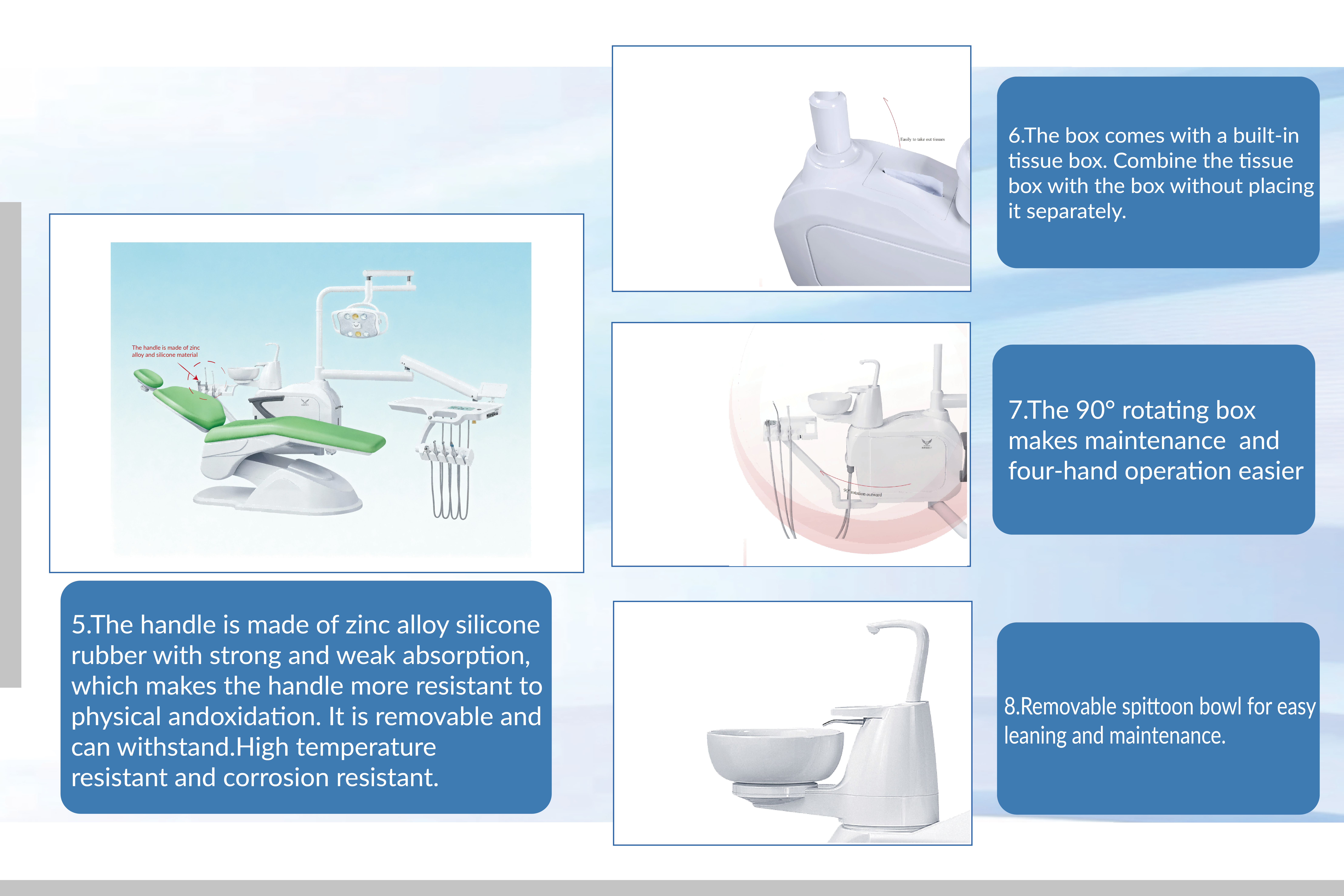
Selecting the right dental chair is one of the most critical investment decisions a dental practice will make. Your dental chair serves as the foundation of patient comfort, clinical efficiency, and staff productivity throughout each working day. Because a dental chair typically remains in use for many years, choosing the wrong model can lead to costly replacements, patient dissatisfaction, and operational inefficiencies that compound over time.
Before committing to a dental chair purchase, your practice must evaluate multiple dimensions of performance, quality, and fit. The decision goes far beyond aesthetics or brand recognition. A comprehensive evaluation framework ensures that your dental chair investment aligns with clinical workflows, patient demographics, budget constraints, and long-term practice goals. This article walks you through the essential factors that should guide your dental chair selection process.
Understanding Ergonomics and Patient Comfort
Seating Design and Adjustment Range
Patient comfort directly influences treatment outcomes and practice reputation. A dental chair must offer intuitive adjustment mechanisms that allow practitioners to position patients precisely for different procedures. The seat width, backrest recline range, and headrest mobility all contribute to how well your dental chair adapts to diverse patient body types and clinical requirements. Look for a dental chair with motorized elevation, smooth recline articulation, and responsive positioning that minimizes patient anxiety during setup.
The armrest design of your dental chair plays an underestimated role in patient positioning and comfort. Removable or swing-away armrests on your dental chair provide flexibility when treating pediatric patients, elderly patients with mobility constraints, or patients requiring special access angles. Test whether the dental chair's headrest securely supports different head positions without slipping or requiring constant manual adjustment during clinical work.
Support for Extended Treatment Sessions
Extended treatment sessions demand that your dental chair provide consistent lumbar support and pressure distribution. Inadequate cushioning or poor backrest ergonomics cause patient discomfort, leading to increased movement, reduced treatment quality, and negative reviews. Evaluate whether your dental chair includes memory foam padding, contoured support surfaces, or adjustable lumbar zones that adapt to individual patient needs. A well-designed dental chair reduces patient fatigue and allows practitioners to work without frequent repositioning interruptions.
Clinical Features and Operational Efficiency
Delivery System Integration
Your dental chair must integrate seamlessly with your practice's delivery system architecture. Overhead delivery systems, cart-mounted systems, and floor-mounted systems each require different mounting points and spatial relationships relative to your dental chair. Verify that your dental chair's design accommodates your preferred delivery configuration without compromising operator access or creating awkward reach angles. A poorly matched dental chair and delivery system combination forces staff to adopt uncomfortable postures, increasing fatigue and potential injury risk.
Control interfaces on your dental chair should be intuitive and responsive. Evaluate whether foot pedals are ergonomically positioned, whether touchscreen controls respond reliably, and whether your dental chair's preset memory functions can store multiple patient positioning profiles. Staff members with varying heights and physical abilities must be able to operate the dental chair comfortably without fumbling for controls or learning complex operation sequences.
Infection Control and Maintenance Requirements
Infection control standards demand that your dental chair's upholstery, seams, and crevices be easily cleanable and compatible with disinfectants. Examine whether your dental chair features seamless cushioning that resists moisture infiltration, whether headrest covers are removable for sterilization, and whether the frame design eliminates hard-to-reach areas where bacteria could accumulate. A dental chair with poor infection control design creates compliance risks and increases time spent on between-patient decontamination.
Durability, Warranty, and Total Cost of Ownership
Build Quality and Component Reliability
A commercial-grade dental chair represents a significant capital expense, and durability directly affects return on investment. Examine the frame construction material, motor specifications, and hydraulic component ratings of your prospective dental chair. Stainless steel or powder-coated steel frames resist corrosion better than painted alternatives. Check whether your dental chair uses sealed motors with lubricated bearings rather than exposed components prone to dust infiltration. Request information about the dental chair's expected cycle life, meaning how many raise-lower cycles the chair can endure before performance degradation.
Component replacement costs represent hidden expenses that many practices overlook when evaluating a dental chair purchase. A dental chair with proprietary upholstery covers, custom motor assemblies, or specialized control boards will be significantly more expensive to repair than models using standardized components. Research whether your dental chair manufacturer stocks replacement parts locally or charges extended shipping delays for repairs. Some dental chair manufacturers design for modularity and serviceability, while others prioritize cost reduction at the expense of long-term repairability.
Warranty Coverage and Service Support
Warranty terms vary dramatically across dental chair manufacturers and models. Standard warranty periods typically range from one to five years, but coverage scope differs significantly. Your dental chair warranty may cover labor costs, parts replacement, and travel expenses, or it may limit coverage to defective materials only. Practices in rural areas should prioritize dental chair manufacturers offering fast service response times or local technician networks. Urban practices may have more flexibility in choosing dental chair models from manufacturers with limited local presence but strong online support resources.
Before finalizing your dental chair purchase, confirm service response time guarantees in your warranty documentation. Some dental chair manufacturers commit to 24-hour or 48-hour onsite response, while others may require longer wait times. Calculate the financial impact of your dental chair being out of service for one day, one week, or longer due to repairs. This analysis often justifies paying a premium for a dental chair model from a manufacturer known for reliable service and rapid response availability.
FAQ
What makes a dental chair ergonomic for extended clinical use?
An ergonomic dental chair features motorized height and recline adjustment, contoured lumbar support, and pressure-distributing cushioning that accommodates diverse patient sizes. The dental chair should position practitioners at neutral spine angles without requiring constant manual repositioning. Test the dental chair with actual patients and observe whether staff report reduced back and shoulder fatigue after switching to a new model.
How often should a dental chair be replaced or upgraded?
Most practices keep a dental chair in service for seven to twelve years before replacement becomes economically justified. However, your dental chair may warrant earlier replacement if repair costs exceed thirty to forty percent of the original purchase price, if upholstery deteriorates despite proper maintenance, or if newer models offer significantly improved infection control or efficiency features. Budget allocation for periodic dental chair evaluation ensures you replace equipment before catastrophic failure disrupts patient scheduling.
Should budget always drive the dental chair selection decision?
While budget constraints are legitimate, selecting the cheapest dental chair available often increases total cost of ownership through frequent repairs and patient dissatisfaction. Mid-range dental chair models typically offer superior value compared to budget options, providing better reliability and ergonomics with moderate cost premiums. Prioritize dental chair models that match your practice's clinical volume, patient demographics, and treatment specializations rather than optimizing for lowest purchase price alone.